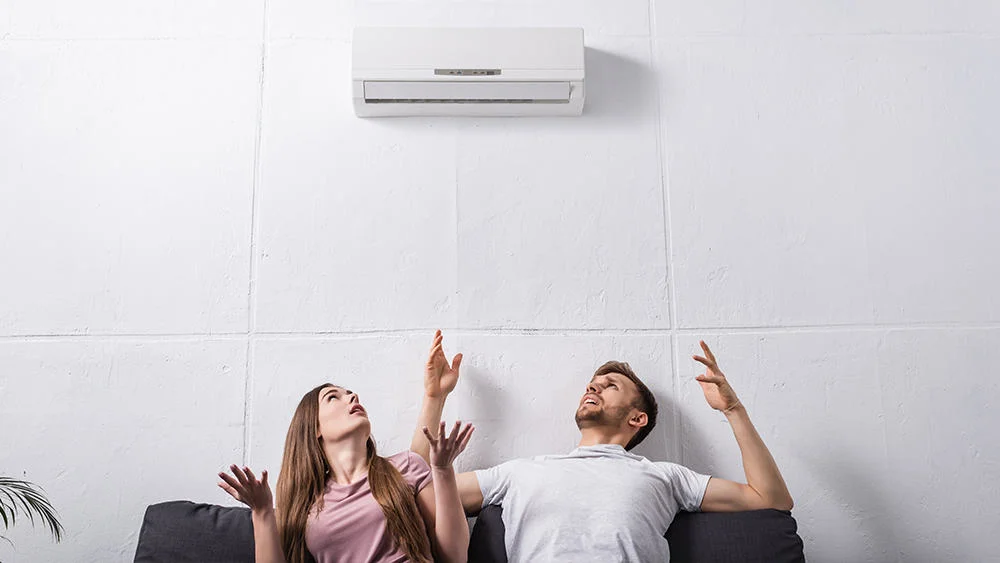
Few HVAC problems cause more stress than an air conditioner that won’t turn on at all. When this happens—especially during hot Texas weather—many homeowners immediately search “why won’t my AC turn on?” looking for quick answers before calling for AC repair.
While some causes are simple, others signal serious system issues that require professional attention. Understanding what may be preventing your AC from turning on can help you take the right steps without making the problem worse.
When an AC system won’t power on, it usually means the system isn’t receiving power, a safety control has been triggered, or a key component has failed. Even if the thermostat appears to be working, the AC system itself may be unable to start.
This issue should never be ignored, especially if the system has stopped suddenly.
One of the most common and easily overlooked reasons an AC won’t turn on is a thermostat issue. If the thermostat isn’t sending the correct signal, the system won’t start.
Check for:
If the thermostat appears unresponsive or inconsistent, professional AC repair may be needed.
If your AC suddenly won’t turn on, a tripped breaker is a strong possibility. Breakers trip when electrical demand becomes unsafe, protecting your home and HVAC system.
If the breaker trips repeatedly after resetting, it’s a sign of a deeper electrical issue that requires professional AC repair.
Your outdoor AC unit relies on a dedicated power source. If the disconnect switch is off or power is interrupted, the system won’t start.
Outdoor power issues may be caused by:
Outdoor electrical problems should always be handled by trained HVAC professionals.
Many modern HVAC systems include safety switches that shut the system off when a problem is detected. A clogged condensate drain line can trigger these switches to prevent water damage.
When this happens, the AC won’t turn on at all until the issue is cleared and the system is reset.
Capacitors and contactors help power the AC system during startup. If either component fails, the system may be completely unresponsive.
Signs of component failure include:
These parts require professional AC repair and should not be handled as DIY fixes.
The compressor and motors are essential to AC operation. If one of these components fails, the system may not turn on at all.
Compressor issues are serious and often require immediate professional diagnosis to prevent further system damage.
Ignoring an AC that won’t start can lead to:
What starts as a no-power issue can quickly escalate if left unresolved.
If your AC won’t turn on:
These actions can worsen the problem or create safety risks.
Routine HVAC maintenance helps prevent system shutdowns by:
Homeowners who schedule regular maintenance experience fewer sudden system failures.
You should schedule AC repair if:
A trained HVAC technician can safely diagnose the issue and restore proper operation.
No-power issues often involve electrical and mechanical components that require expert diagnosis. Professional AC repair ensures problems are fixed correctly without risking further damage or safety hazards.
TX Air Mechanics provides honest AC repair services designed to restore reliable cooling and protect system performance—without unnecessary upselling.

If your AC won’t turn on at all, professional AC repair can help identify the issue and restore comfort safely. Scheduling service or requesting a free second opinion ensures your system is evaluated accurately and brought back online as quickly as possible.