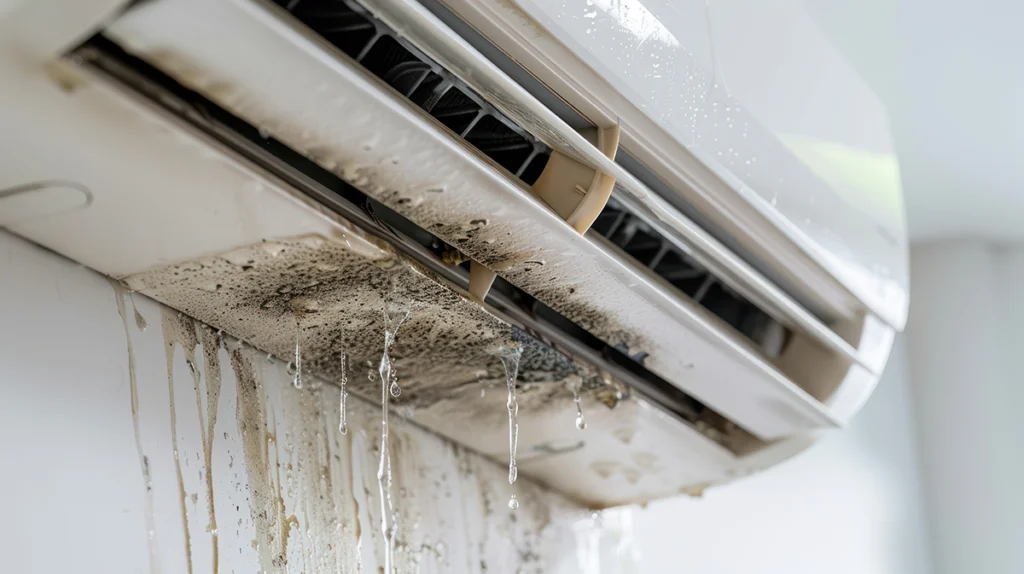
Finding water around your air conditioner or near indoor vents can be stressful—especially when it happens unexpectedly. Many homeowners search “why is my AC leaking water inside the house?” when they notice puddles, ceiling stains, or moisture near their HVAC system.
Water leaks are never normal for an AC system and often indicate drainage, airflow, or component issues. Understanding the most common causes helps homeowners act quickly and prevent water damage.
While air conditioners naturally remove moisture from the air, that moisture should drain safely away through the condensate system. Any water leaking inside the home means something isn’t working correctly.
Indoor AC leaks should always be addressed promptly.
The most common cause of AC water leaks is a clogged drain line. Dirt, algae, and debris can block the line, causing water to back up and overflow into the home.
Regular maintenance helps keep drain lines clear.
Clogged air filters restrict airflow, which can cause the evaporator coil to freeze. When the ice melts, excess water can overflow the drain pan and leak inside.
Replacing air filters regularly helps prevent freezing and leaks.
When airflow or refrigerant levels are low, the evaporator coil may freeze. As it thaws, large amounts of water can overwhelm the drain system.
Frozen coils often signal deeper system issues.
Over time, drain pans can crack or rust, especially in older systems. When this happens, water leaks directly into surrounding areas instead of draining properly.
Drain pan damage often goes unnoticed until water appears.
If the system isn’t level or the drain line is installed incorrectly, water may not flow toward the drain as intended. This can cause water to collect and leak.
Proper installation is critical for drainage performance.
Low refrigerant can cause coil freezing, which eventually leads to water leaks during thaw cycles.
Refrigerant issues always require professional AC service.
Excess humidity causes the system to produce more condensation than usual. If the drainage system can’t keep up, leaks may occur.
Humidity issues often point to efficiency problems.
Ignoring water leaks can lead to:
Water damage worsens quickly if not addressed.
If your AC is leaking water inside:
Prompt action helps limit damage.
Routine HVAC maintenance includes clearing drain lines, inspecting coils, and checking airflow. Maintenance helps prevent blockages, freezing, and drainage failures.
Well-maintained systems are far less likely to leak.
You should schedule professional AC repair if:
Professional diagnostics identify the root cause safely.
TX Air Mechanics provides honest AC diagnostics designed to identify the cause of water leaks and prevent further damage. Our team focuses on protecting your home and restoring reliable system operation.

If your AC is leaking water inside your home, TX Air Mechanics can help identify the issue and prevent costly damage. Scheduling professional AC service or requesting a free second opinion with TX Air Mechanics ensures your system is evaluated thoroughly and repaired correctly.