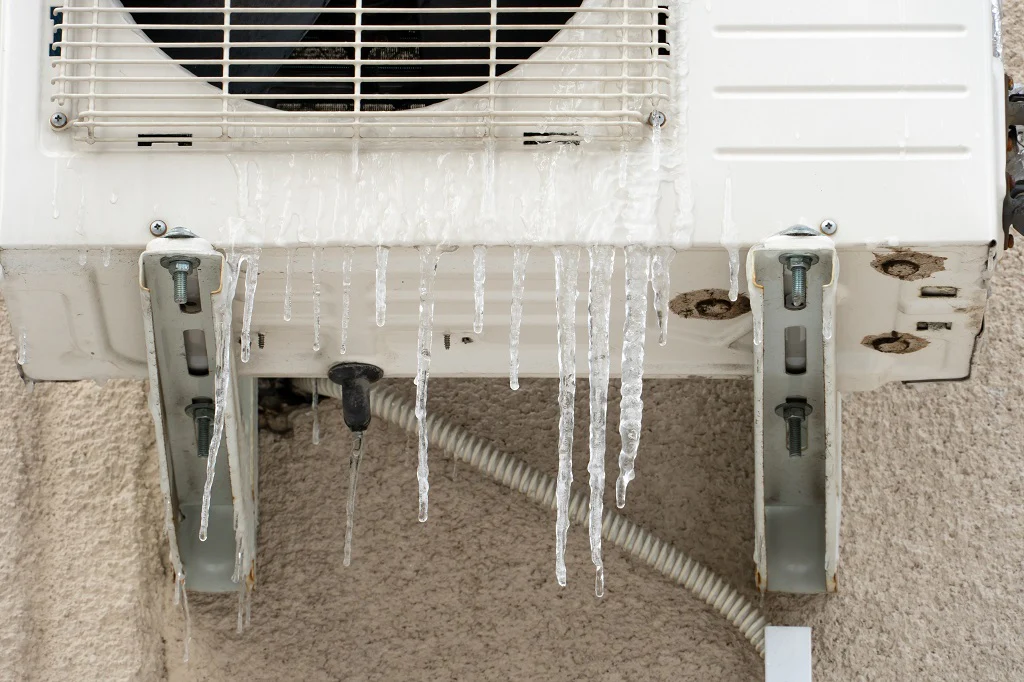
Seeing ice on your air conditioner may seem strange—especially during hot weather—but it’s a common HVAC problem. Many homeowners search “why is my AC freezing up?” when airflow drops, cooling stops, or ice appears on the indoor unit or refrigerant lines.
An AC that’s freezing up is a clear sign something isn’t working correctly. Ignoring the issue can lead to serious system damage and costly repairs. Understanding the most common causes helps homeowners act quickly and protect their cooling system.
Air conditioners are designed to absorb heat—not freeze. When ice forms, airflow is restricted, cooling performance drops, and internal components are placed under stress.
Running a frozen AC can result in:
Freezing should always be addressed immediately.
The most common cause of a frozen AC is restricted airflow from a dirty air filter. When airflow is limited, the evaporator coil becomes too cold and ice begins to form.
Replacing air filters regularly helps:
Dirty filters are often the first thing professionals check.
Low refrigerant levels reduce pressure in the system, causing the evaporator coil temperature to drop below freezing. Ice forms quickly and spreads across the coil.
Low refrigerant is usually caused by a leak and always requires professional AC repair.
Closed vents, blocked registers, or damaged ductwork restrict airflow throughout the system. Reduced airflow prevents warm air from reaching the evaporator coil, allowing ice to form.
Airflow problems often worsen over time if not addressed.
Dust and debris on the evaporator coil act as insulation, preventing proper heat absorption. As the coil temperature drops, moisture freezes instead of draining away.
Routine HVAC maintenance helps keep coils clean and functioning properly.
If the blower motor isn’t moving enough air across the evaporator coil, the coil can freeze. Failing motors, worn belts, or electrical issues often cause airflow reduction.
Blower issues typically require professional diagnosis and repair.
Running an AC when outdoor temperatures are too low can cause freezing, especially if airflow or refrigerant levels are already marginal.
AC systems are designed for warm-weather operation and may freeze in cooler conditions.
If the thermostat causes the system to run continuously without cycling properly, the evaporator coil may drop below freezing.
Thermostat calibration and system controls should be checked if freezing occurs repeatedly.
You may be dealing with a frozen AC if you notice:
These symptoms indicate the system should be turned off and inspected.
If your AC is freezing up:
Running a frozen system can cause serious damage.
Routine HVAC maintenance helps prevent freezing by:
Maintenance catches issues early—before ice forms.
You should schedule professional AC repair if:
Professional diagnosis ensures the root cause is fixed correctly.
TX Air Mechanics provides honest AC diagnostics designed to identify airflow and refrigerant issues that cause freezing. Our approach focuses on fixing the real problem—not temporary solutions or unnecessary replacements.

If your AC is freezing up, TX Air Mechanics can help identify the cause and restore reliable cooling in your home. Scheduling professional AC repair or requesting a free second opinion with TX Air Mechanics ensures your system is evaluated thoroughly and repaired the right way.