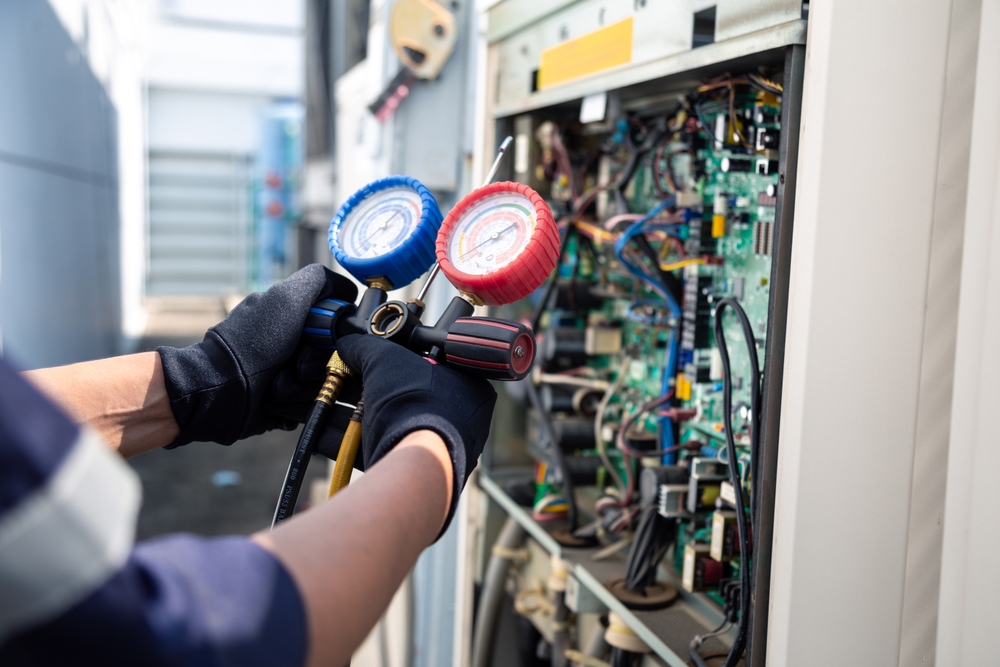
If your energy bills keep climbing with no clear explanation, your HVAC system is often the main reason. Homeowners frequently search “why is my energy bill so high?” or “HVAC causing high electric bill” when monthly costs jump unexpectedly.
Heating and cooling account for a large portion of home energy use. When something isn’t working efficiently, your HVAC system may run longer, work harder, and consume far more energy than necessary.
Your HVAC system runs more than almost any other appliance in your home. Even small efficiency problems can lead to noticeable increases in energy usage.
Higher runtime almost always equals higher utility costs.
Clogged air filters restrict airflow, forcing the system to run longer to reach the desired temperature. This added strain increases energy consumption.
Dirty filters are one of the most common causes of rising bills.
If cool or warm air escapes through walls, attics, or windows, your HVAC system must constantly compensate. Poor insulation causes nonstop runtime.
Insulation problems make HVAC systems work overtime.
Low refrigerant levels reduce the system’s ability to transfer heat efficiently. The system runs longer without producing better comfort.
Refrigerant problems always require professional service.
Evaporator and condenser coils coated with dirt reduce heat transfer. When heat can’t move efficiently, the system consumes more energy to do the same job.
Coil cleaning restores efficiency.
If your HVAC system rarely shuts off, energy use skyrockets. Constant operation usually signals airflow, sizing, or system performance issues.
Systems are designed to cycle—not run nonstop.
Leaky ducts allow conditioned air to escape into attics or crawl spaces. Your system keeps running because the air never reaches living areas.
Duct leaks are a hidden energy drain.
Older HVAC systems are significantly less efficient than newer models. As systems age, they require more energy to produce the same comfort.
Efficiency declines over time—even if the system still works.
Frequent thermostat adjustments, extreme temperature settings, or improper programming can increase runtime dramatically.
Consistent settings improve efficiency.
Ignoring rising energy costs can lead to:
High bills are often an early warning sign.
If your HVAC is driving energy bills up:
Small fixes can sometimes make a big difference.
Routine HVAC maintenance includes airflow testing, coil cleaning, refrigerant checks, and system performance evaluations. Maintenance helps systems cool and heat more efficiently with less energy.
Maintained systems cost less to operate.
You should schedule HVAC service if:
Professional diagnostics identify energy-wasting problems accurately.
TX Air Mechanics provides honest HVAC evaluations focused on improving efficiency and reducing unnecessary energy costs. Our team looks at airflow, system performance, and efficiency issues to help homeowners regain control of their energy bills.

If your energy bills keep rising and your HVAC system may be the cause, TX Air Mechanics can help identify the problem and improve efficiency. Scheduling professional HVAC service or requesting a free second opinion with TX Air Mechanics ensures your system is evaluated thoroughly and optimized to run smarter—not harder.