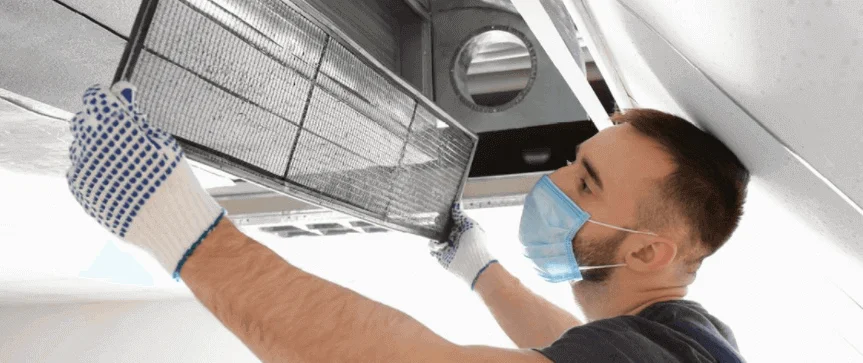
A mildew smell coming from your air conditioner is a common complaint—especially in humid climates. Many homeowners search “AC smells like mildew” or “mildew smell from air vents” when the air feels damp, stale, or unpleasant whenever the system runs.
Mildew odors usually indicate moisture buildup somewhere inside the HVAC system. While the smell may seem mild at first, it often points to conditions that can affect indoor air quality and system efficiency if left unresolved.
Air conditioners naturally remove moisture from the air. When that moisture doesn’t drain properly or dry out between cycles, mildew can develop on internal components.
Once present, the odor circulates throughout the home.
The evaporator coil remains damp during operation. Without proper cleaning and airflow, mildew can grow on the coil surface.
This is one of the most common odor sources.
A partially or fully clogged drain line causes standing water inside the system. Stagnant water creates the perfect environment for mildew.
Drain line problems often cause recurring smells.
If moisture enters ductwork due to leaks or insulation problems, mildew can develop and spread odors through vents.
Duct-related odors often linger longer.
Filters that trap moisture, dust, and organic debris can contribute to mildew odors as air passes through.
Replacing filters can reduce odors quickly.
Short cooling cycles prevent components from drying completely, allowing moisture to remain inside the system.
Short cycling often leads to persistent odors.
Excess indoor humidity increases condensation throughout the HVAC system, worsening mildew growth.
Humidity control is key to odor prevention.
Without regular maintenance, moisture and debris build up over time. Mildew smells are often an early warning sign.
Maintenance helps stop odor problems before they start.
Ignoring mildew odors can lead to:
Odors rarely disappear on their own.
If your AC smells like mildew:
Treating the source is the only lasting fix.
Routine HVAC maintenance includes coil cleaning, drain line flushing, airflow testing, and moisture inspections. Maintenance removes mildew at the source and helps prevent future buildup.
Clean systems deliver fresher indoor air.
You should schedule HVAC service if:
Professional diagnostics ensure safe, effective treatment.
TX Air Mechanics provides honest HVAC diagnostics focused on moisture control and indoor air quality. Our team identifies the source of mildew smells and restores clean, comfortable airflow throughout the home.

If your air conditioner smells like mildew, TX Air Mechanics can help identify the cause and improve your indoor air quality. Scheduling professional HVAC service or requesting a free second opinion with TX Air Mechanics ensures your system is evaluated thoroughly and treated the right way.