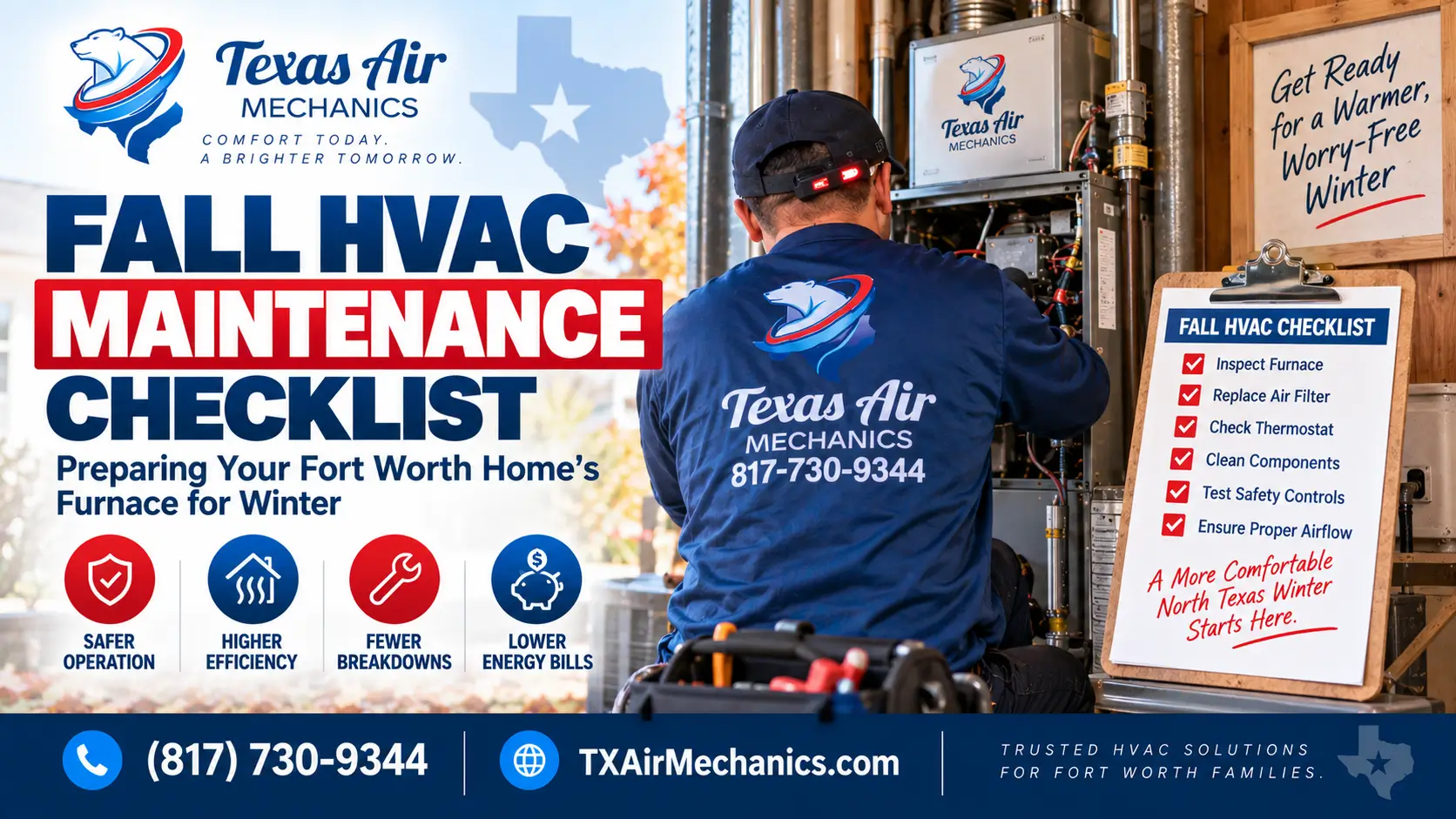
Fall in Fort Worth can still feel warm during the day, but cooler nights are a reminder that the heating season is approaching. Waiting until the first cold morning to test your furnace can leave you dealing with unexpected repairs when you need heat the most.
Following a fall HVAC maintenance checklist in Fort Worth gives homeowners time to catch small problems before winter arrives. It also helps improve heating performance, indoor comfort, and system reliability.
Texas Air Mechanics helps homeowners throughout Fort Worth and surrounding North Texas communities prepare furnaces, heat pumps, and HVAC systems for changing seasonal conditions.
North Texas does not have the same long winter season as colder parts of the country, but furnaces can still sit unused for months before suddenly being needed.
Dust, electrical problems, dirty filters, thermostat issues, and worn components can develop while the heating system is off.
A pre-winter HVAC inspection gives a technician an opportunity to identify those problems before temperatures drop.
Fall maintenance may also help your heating system operate more efficiently, reduce unnecessary strain, and lower the chance of a surprise breakdown.
Homeowners often ask when to schedule heating maintenance in Fort Worth.
Early to mid-fall is usually a practical time. Scheduling service before colder weather arrives gives you more time to handle repairs if a technician discovers a problem.
You do not need to wait until the furnace is running every day.
Booking maintenance early can help you:
If you have not had your heating system checked this year, Texas Air Mechanics offers heating and furnace services for Fort Worth homeowners.
Use this checklist to prepare your system before winter.
Start with the air filter.
A dirty filter restricts airflow and makes your HVAC system work harder. It can also contribute to uneven temperatures, longer heating cycles, and unnecessary wear.
Check the filter before heating season begins and replace it if it looks dirty.
Homes with pets, allergies, heavy dust, or frequent HVAC use may need filter changes more often.
Switch the thermostat from cooling to heating and raise the temperature a few degrees above the current indoor temperature.
The heating system should start normally.
Pay attention to:
A thermostat issue can sometimes look like a furnace problem, so checking it early is useful.
Walk through the home and make sure vents are open and not blocked by furniture, rugs, boxes, or curtains.
Restricted airflow can make the furnace run longer and create uneven heating.
Return vents should also stay clear so the system can pull air back efficiently.
A furnace may make normal startup and airflow sounds, but new noises deserve attention.
Call for service if you notice:
These sounds may indicate motor, blower, ignition, electrical, or mechanical problems.
One of the main reasons why schedule fall furnace maintenance is to reduce the chance of finding a problem during a cold night.
A furnace tune up before winter can identify worn parts while there is still time to repair them.
Routine maintenance helps confirm that major components are operating properly before the system faces heavier winter use.
Dirty components, airflow problems, and poor system operation can increase energy use.
Maintenance helps the system operate closer to its intended performance.
Loose electrical connections, dirty burners, worn motors, and weak components may not cause an immediate failure.
Finding them during a scheduled inspection may prevent a more expensive repair later.
Texas Air Mechanics offers HVAC maintenance plans for homeowners who want regular seasonal care.
A professional furnace tune up before winter involves more than changing a filter.
The exact inspection depends on the system, but a technician may evaluate several important areas.
Connections, controls, and electrical components should be inspected for wear or unsafe conditions.
The blower helps move heated air throughout the home. Poor blower performance can affect comfort and airflow.
For gas furnaces, the ignition system, burners, and related components should operate correctly.
Heating systems should be checked for conditions that could affect safe operation.
The thermostat should communicate properly with the heating equipment and respond to temperature changes.
Professional maintenance allows the entire system to be evaluated rather than focusing on only one component.
A light dusty smell during the first furnace startup of the season can happen as accumulated dust burns off.
However, strong or continuing odors should not be ignored.
Turn the system off and contact a professional if you notice:
If indoor air quality is also a concern, Texas Air Mechanics provides indoor air quality solutions.
Gas furnaces need special attention because they use combustion to produce heat.
Fall furnace maintenance in Texas should include checking the system for proper operation before extended winter use.
Homeowners should not attempt to adjust gas valves, burners, ignition components, or internal safety controls themselves.
If you have concerns about your furnace, schedule a professional inspection instead of waiting for a complete shutdown.
Not every Fort Worth home uses a furnace.
If your home has a heat pump, fall is still an important time for maintenance because the same system may have been running heavily during summer.
A heat pump should transition correctly from cooling to heating and operate efficiently as outdoor temperatures change.
Texas Air Mechanics provides heat pump maintenance and heat pump repair for local homeowners.
If your HVAC system uses an outdoor unit, inspect the area around it before winter.
Remove loose leaves, grass, and debris from around the equipment.
Do not cover the unit completely unless the manufacturer specifically recommends it. Heat pumps still need outdoor airflow during winter operation.
Keeping the area clear helps support proper airflow and makes future service easier.
Maintenance may reveal a problem that requires repair.
Warning signs include:
Addressing these problems early can reduce the risk of losing heat during colder weather.
If the furnace is older and requires repeated repairs, replacement may also be worth discussing.
You can learn more about larger heating projects in our guide to furnace and AC replacement cost.
HVAC maintenance works best when the rest of the home is also prepared.
Before winter, consider checking:
Reducing heat loss helps your furnace maintain comfortable temperatures without running longer than necessary.
Texas Air Mechanics provides residential heating, cooling, repair, installation, and maintenance services throughout Fort Worth and surrounding North Texas communities.
Our team focuses on practical recommendations based on the actual condition of the system rather than assuming every heating problem requires replacement.
You can learn more about Texas Air Mechanics, view examples of our HVAC work, or check Texas Air Mechanics reviews on Google.
Following a fall HVAC maintenance checklist in Fort Worth can help you enter winter with more confidence in your heating system.
Do not wait for the first freezing night to discover that your furnace needs service.
Texas Air Mechanics serves Fort Worth and nearby North Texas communities with furnace inspections, maintenance, repairs, and heating services.
Ready to prepare your HVAC system for winter? Contact Texas Air Mechanics to schedule your fall heating service.
Early to mid-fall is a good time because it allows you to identify and repair problems before colder winter temperatures arrive.
Annual maintenance is commonly recommended because it helps identify wear, airflow issues, electrical problems, and other concerns before they cause breakdowns.
Important steps include changing the filter, testing the thermostat, checking vents, listening for unusual sounds, clearing outdoor equipment, and scheduling a professional system inspection.
A furnace tune up before winter helps confirm that the heating system is operating properly before periods of heavier use. It can also uncover developing problems early.
Homeowners can replace filters, clear vents, check thermostat settings, and keep equipment areas clean. Internal furnace components, gas systems, electrical parts, and safety controls should be inspected by a qualified HVAC technician.
Signs include frequent cycling, unusual noises, weak airflow, cold air, high heating bills, repeated shutdowns, and a furnace that will not start.
Yes. Heat pumps operate during both cooling and heating seasons, so a fall inspection can help confirm that the system is ready to transition into winter operation.
Texas Air Mechanics provides furnace maintenance, heating inspections, repairs, and HVAC services throughout Fort Worth and surrounding North Texas communities.