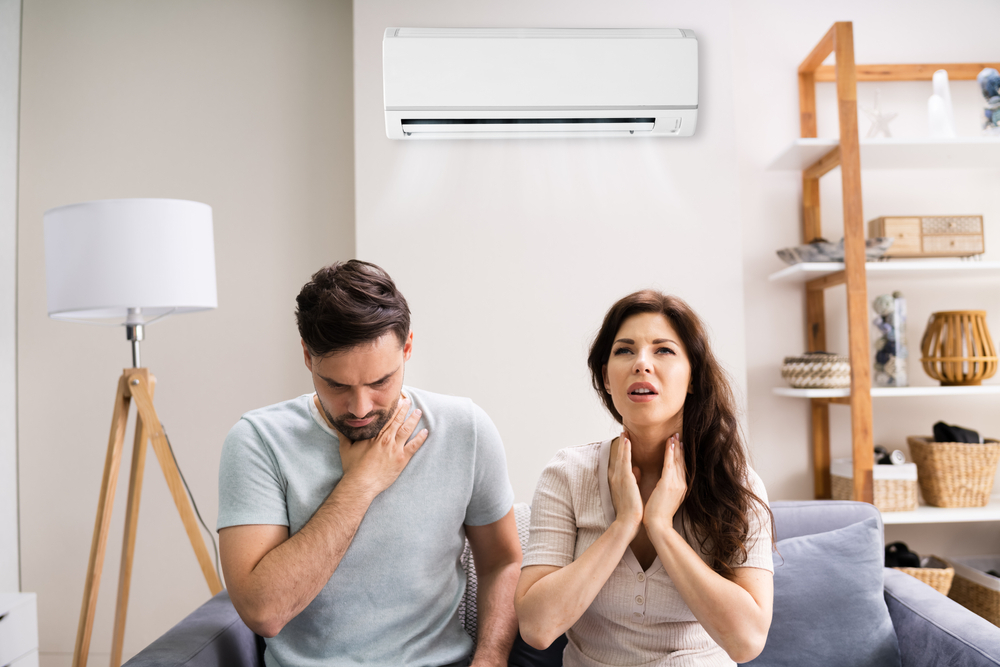
If you or your family experience frequent headaches, allergies, or respiratory irritation at home, your HVAC system may be contributing to the problem. Many homeowners search “can a dirty HVAC system make you sick?” when health symptoms seem worse indoors than outside.
HVAC systems circulate the air you breathe every day. When they’re dirty or poorly maintained, they can spread contaminants throughout your home instead of filtering them out. Understanding how HVAC cleanliness affects health helps homeowners take the right steps to protect indoor air quality.
Your HVAC system continuously moves air through filters, ductwork, and internal components. When these parts are clean, they help remove dust and allergens. When they’re dirty, contaminants can build up and circulate.
A dirty HVAC system doesn’t just affect comfort—it can impact health.
Over time, HVAC systems can collect:
Without proper maintenance, these contaminants are blown into living spaces.
Poor indoor air quality caused by a dirty HVAC system may contribute to:
Symptoms often improve when air quality issues are addressed.
Air filters are designed to trap airborne particles. When filters are clogged or overdue for replacement, they allow contaminants to pass through and recirculate.
Replacing filters regularly is one of the easiest ways to protect indoor air quality.
Ductwork can collect dust and allergens over time. If disturbed or leaking, these particles are released into the airflow.
Duct inspections help determine whether buildup or leaks are contributing to poor air quality.
Moisture buildup inside HVAC systems can lead to mold growth on coils or in drain pans. Mold spores are easily spread through vents and can significantly affect health.
Musty odors are often an early sign of mold-related issues.
Without routine HVAC maintenance, internal components become coated with dust and debris. As air passes over dirty parts, contaminants are released into the home.
Maintenance helps keep internal surfaces clean and dry.
Excess humidity creates conditions where mold, mildew, and dust mites thrive. HVAC systems that don’t manage humidity effectively can worsen indoor air quality.
Balanced humidity supports healthier breathing.
Poor indoor air quality can lead to:
Clean air plays a major role in overall health and comfort.
Professional HVAC service may include:
These services help remove contaminants at the source.
Indoor air quality solutions work alongside HVAC systems to capture fine particles and control moisture. These solutions help create a healthier indoor environment—especially for allergy-sensitive households.
Cleaner air supports better health and comfort.
You should schedule HVAC service if:
Professional evaluation helps identify air quality concerns.
TX Air Mechanics provides honest HVAC diagnostics and indoor air quality services designed to improve the air you breathe at home. Our approach focuses on identifying real problems—not masking symptoms.

If you’re concerned that a dirty HVAC system may be affecting your health, TX Air Mechanics can help evaluate your system and improve indoor air quality. Scheduling professional HVAC service or requesting a free second opinion with TX Air Mechanics ensures your system supports a cleaner, healthier home environment.